Endoscopy
Sigmoidoscopy
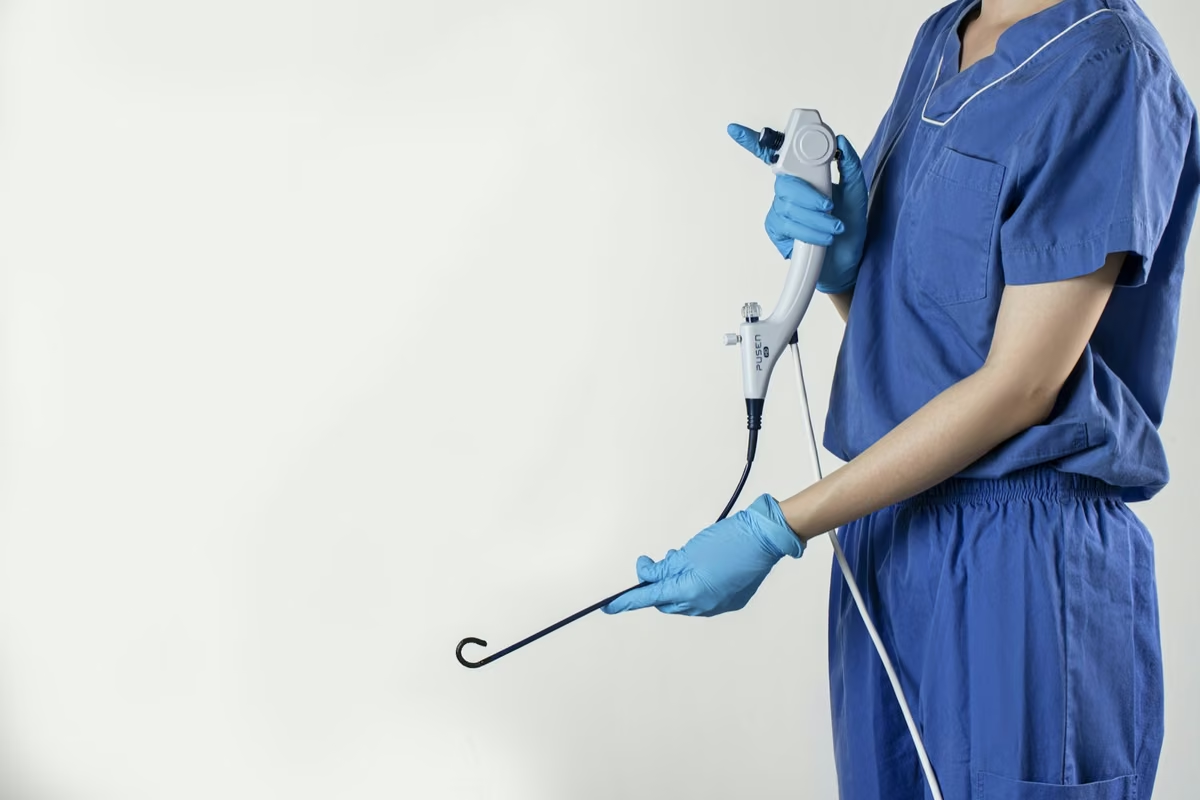
A sigmoidoscopy examines the rectum and the last part of the large intestine using a flexible tube with a camera. This procedure is usually performed without anesthesia, unless otherwise discussed in advance.
What is it?
A sigmoidoscopy is a procedure in which a gastroenterologist examines the inside of the rectum and the final section of the large intestine. This is done using an endoscope, a flexible tube with optical fibers and a camera that transmits light and images. No anesthesia is used for this procedure. If you would still like to have anesthesia, it is best to ask your doctor in advance.
Why this examination?
This test can detect abnormalities in the rectum and the final section of the large intestine. It is used to evaluate the mucosal lining of the large intestine.
Preparation
No preparations are needed at home. You do not need to fast before this exam. Just before the exam, a nurse will often administer an enema. This removes any stool present in the last section of the large intestine. This allows the gastroenterologist to get a clear view of the intestinal wall. This is important for assessing the severity of the inflammation.
How does it go?
During the procedure, you will lie on your left side. The doctor will insert the endoscope into the rectum through the anus and gradually advance it into the large intestine. You can view the images of the intestine together with the doctor. The advancement of the endoscope into the intestine can sometimes be painful. In general, this exam is well tolerated. You may feel an urge to use the restroom, but this is a false urge caused by carbon dioxide (CO2) being blown into the bowel. This is done to better distend the bowel so that the inner wall can be visualized.
After the exam, there will still be time for you to ask the doctor any questions you may have.
After the examination
After the examination, you may drive again right away.
Side effects
If you experience severe abdominal pain or bleeding after the exam, you should contact your doctor and/or IBD nurse.