Endoscopy
Gastroscopy (stomach examination)
A gastroscopy is a procedure in which the doctor examines the esophagus, stomach, and duodenum using a flexible tube with a camera (endoscope). It can be performed under local anesthesia, sedation, or general anesthesia.
What is it?
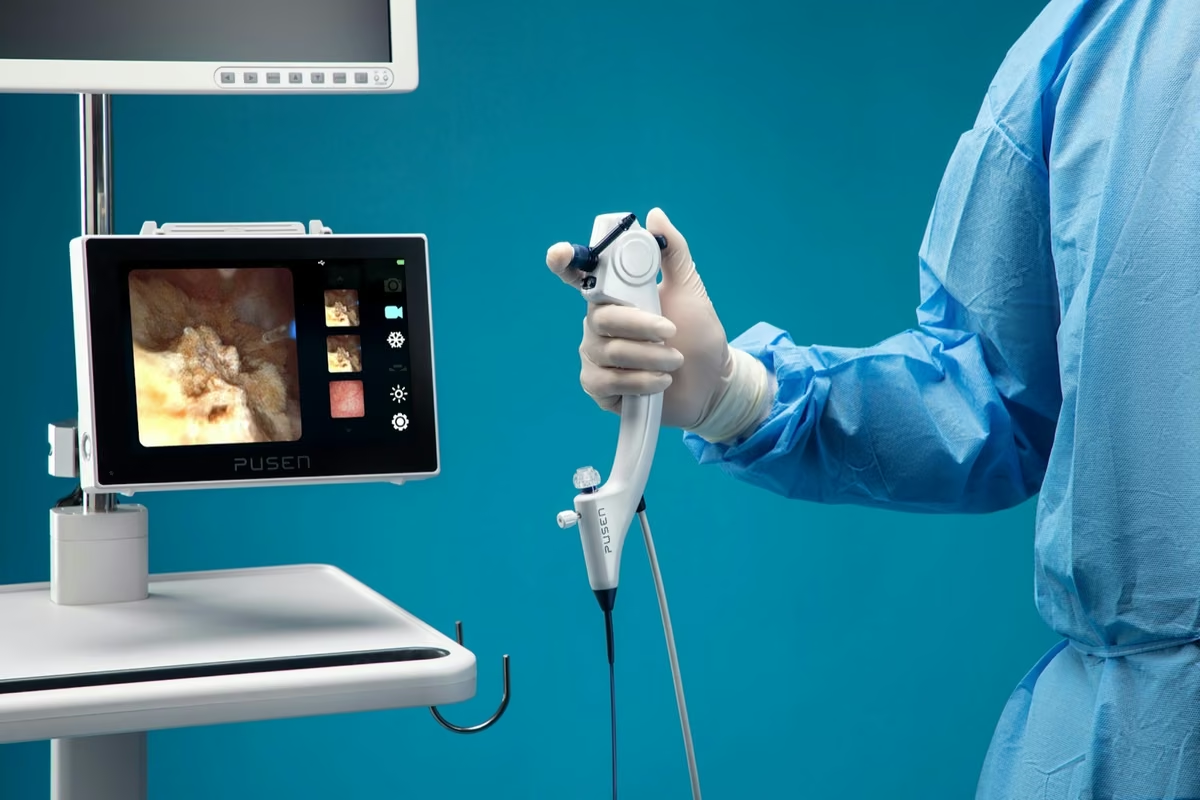
A gastroscopy is a procedure in which a gastroenterologist examines the inside of the esophagus, stomach, and duodenum. An endoscope is used for this purpose. It is a flexible tube with optical fibers and a camera that can transmit light and images.
The procedure can be performed in three different ways:
- Using only a throat anesthetic (Xylocaine spray).
- Under light sedation administered via an intravenous injection (sedation with Midazolam and/or Rapifen).
- Under general anesthesia. In that case, an outpatient admission is required.
Why this examination?
This test can detect abnormalities in the esophagus, stomach, and duodenum. For patients with liver cirrhosis, it is particularly important to detect esophageal varices. However, other conditions can also be examined.
Preparation
- You must fast for at least 6 hours before the test. This means you must not eat, drink, or smoke. (Exception: You may drink water up to one hour before the test.)
- If you have scheduled the procedure under light sedation or general anesthesia, please ask a family member or friend to take you home after the procedure. You cannot receive sedation or anesthesia if you have to go home alone.
- The nurse will ask you to remove any dentures and take off your glasses.
- Your throat will be numbed with a spray. This spray has a banana flavor and causes a sensation of swelling in your mouth or throat (similar to what you experience at the dentist).
- If the examination is performed under light sedation, the nurse will insert a needle into a vein in your arm to administer the sedative. A small monitoring device will be placed on your finger to monitor your blood oxygen level and heart rate. Sometimes you will receive oxygen through a nasal cannula.
- Sometimes the procedure is performed under general anesthesia, during which you will be completely asleep. This requires an (outpatient) admission and cannot be performed on the day of your appointment. After the procedure, you will return to room [MOU2] once you are sufficiently awake.
- Please bring the referral letter for the examination, along with the reason for the examination, if you have it.
How does it go?
- The exam takes about 5 to 10 minutes.
- During the exam, you will lie on your left side with a mouthpiece between your teeth and lips to prevent you from biting the endoscope.
- The doctor inserts the endoscope through the mouth to the back of the throat. The doctor will then ask you to swallow the endoscope. This may cause slight discomfort.
- During the exam, the nurse will guide you to maintain proper breathing. Your breathing will not be restricted, as your airway will remain clear. It is best to inhale through your nose and exhale slowly through your mouth. Swallowing during the exam is not recommended. You may let saliva flow out of your mouth onto an absorbent cloth.
- During the exam, carbon dioxide gas is blown into the abdomen to ensure a clear view; this may cause a feeling of bloating.
After the examination
- Due to the risk of choking from the throat anesthetic, you must not eat or drink anything for up to 1 hour after the exam.
- You may experience a sore throat for a while after the exam.
- During the first few hours, you may experience symptoms such as belching, mild abdominal pain, cramps, bloating, and flatulence.
- You can resume your normal activities after the examination, unless it was performed under anesthesia.
Risks
Complications such as a lung infection or cardiac arrhythmias are extremely rare when a diagnostic examination is performed. However, when treating esophageal varices during a gastroscopy, there are a few other risks associated with this procedure. For more information, please refer to the information sheet titled “Treatment of Esophageal Varices.”