Endoscopy
ERCP - Endoscopic Retrograde Cholangiopancreatography
This examination evaluates the bile ducts and pancreatic duct using an endoscope and X-rays. A tube is inserted through the mouth to examine the ducts, inject dye, remove gallstones, open blockages, or place stents.
What is it?
The ducts of the pancreas and the gallbladder open into an orifice located in the duodenum—the papilla of Vater. A small muscle surrounding this orifice, the sphincter of Oddi, regulates the flow of bile and pancreatic juice into the small intestine. This examination allows for the assessment of the bile ducts and the pancreatic duct using X-rays and for the performance of treatments via the gastrointestinal tract.
During the procedure, a flexible tube with a camera at the end (endoscope) is inserted through the mouth into the duodenum, where the bile ducts and the pancreatic duct open. A small tube is inserted through the endoscope’s working channel until it reaches the opening of the pancreatic duct and the bile duct (known as the papilla).
A dye is injected to visualize these ducts. An ERCP is performed when other tests do not provide enough information to determine the cause of colic, jaundice, or to detect pancreatic disorders. Treatments can also be performed, such as
- enlarging the papillary opening;
- removal of gallstones;
- widening narrowings;
- Placement of one or more stents (plastic or metal hollow tubes).
Please provide the following information for scheduling purposes and for the start of the study:
- any allergies to contrast agents, latex, iodine, or shellfish;
- heart and/or lung problems, heart valves, a pacemaker, or a defibrillator;
- Taking blood-thinning medications, such as aspirin-containing preparations, Plavix, Marcoumar, Clopidogrel, Ticlid, Xarelto, Pradaxa, Eliquis, Brilique, Marevan, Sintrom… Blood-thinning medication may need to be discontinued well in advance, in consultation with the doctor;
- taking anti-inflammatory medications;
- If you are pregnant or might be pregnant, since X-rays are used.
Preparation
In the department
You must fast for at least 6 hours before the procedure. This means you must not eat, drink, or smoke.
- Once in the room, an IV will be inserted, and you will be asked to remove your glasses, contact lenses, and dentures. A patient gown will be provided for you to put on.
- Female patients will be asked to remove their bras.
- In certain cases, one hour before the procedure begins, you will be given a suppository (suppo) rectally to reduce the risk of pancreatitis.
In the Radiology Department
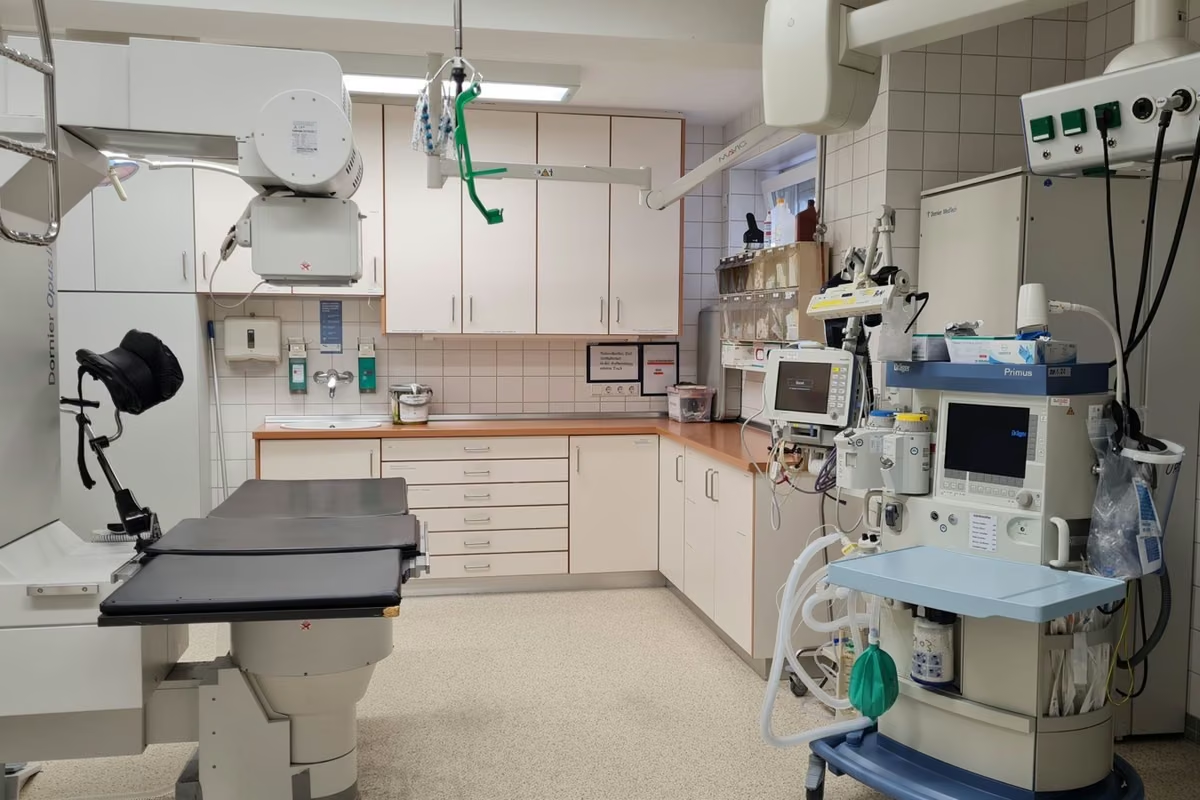
- The nurse will escort you to the examination table.
- During the test, the oxygen level in the blood is measured continuously. This is done using a small monitoring device that is placed on the finger.
- This procedure is performed under general anesthesia. In some cases, the doctor may decide that you need to stay in the hospital for one night for observation.
- Ask a family member or friend to drive you home after the procedure. You must not drive a vehicle after general anesthesia. Do not plan any important activities after the procedure. Your concentration and judgment may be impaired.
How does it go?
- During the procedure, you will lie on your back with a mouthpiece between your teeth and lips to prevent you from biting the endoscope.
- The anesthesiologist inserts a tube into the windpipe to take over breathing.
- The endoscope is then carefully inserted through the mouth into the duodenum until it reaches the opening of the pancreatic duct and the bile duct (papilla).
- A catheter is inserted through the papilla, through which contrast dye is injected so that a radiographic image (X-ray) of these ducts can be taken.
- If a stone is blocking the bile duct, it is removed—if possible—after incising the papilla with a high-frequency cutting wire (papillotomy) using a small balloon or a basket.
- In cases of a narrowing of the bile duct or stones that are difficult to remove, a small plastic or metal tube (stent) is inserted, if possible, to allow the bile to flow again.
- The duration of the examination ranges from 30 to 60 minutes.
After the examination
- You will be taken to the recovery room for further monitoring.
- Sometimes, a single overnight stay is planned.
- You may eat and drink again a few hours after the exam, with your doctor's permission.
Side effects
- You may experience a sore throat for a while.
- You may also experience bloating due to the carbon dioxide that was injected during the exam. Burping or passing gas can provide quick relief.
- We will monitor your blood loss, fever, and pain level. In some cases, you may need to stay overnight.
Risks
Although ERCP is a relatively safe procedure, you should be aware that there are certain risks involved. Of course, the benefits of the procedure outweigh the potential complications.
The pancreas can become inflamed (pancreatitis), which occurs in about 5% of patients. This inflammation manifests as pain in the upper abdomen. You must remain fasting.
If it is necessary to make an incision in the papilla, there is a small risk of bleeding, which can usually be treated endoscopically.
Incising the papilla can also cause a perforation, which is usually resolved with bowel rest and antibiotics. This complication is also very rare.
These complications (and all other rare complications) may require an extended hospital stay for possible treatment with intravenous antibiotics and, in exceptional cases, surgery.
It is also possible that the study will not be successful and will have to be repeated. For this reason, the risks of the study will always be thoroughly weighed against its necessity in advance.