Digestive oncology
EMR - Endoscopic Mucosal Resection
An EMR (Endoscopic Mucosal Resection) is a procedure in which lesions in the mucosa are safely removed using an endoscope, without surgery. The procedure is performed through the mouth or the anus and leaves no scars.
What is it?
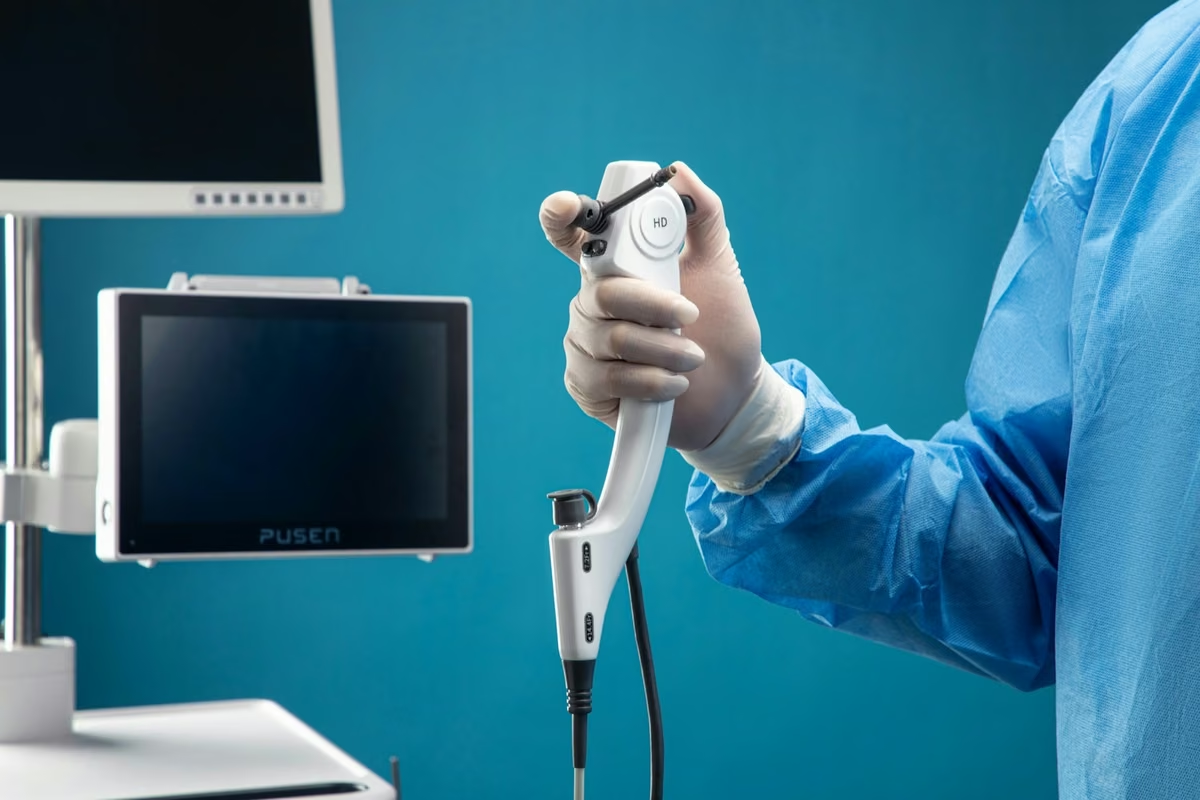
This is a procedure that uses an endoscope (a flexible tube) to remove lesions confined to the mucous membrane. In the past, such lesions were removed surgically. With this new technique, the lesions can be safely removed without scarring and without surgery, resulting in a shorter hospital stay.
These are usually lesions that (if left untreated) may become malignant or are already superficially malignant but have not yet invaded deeper than the mucosa. Sometimes, an endoscopic ultrasound examination will be performed beforehand to confirm the depth.
The procedure is performed through the mouth (for lesions in the esophagus, stomach, or duodenum) or through the anus (for lesions in the colon).
Preparation
An IV will be inserted in your room, and you will be asked to remove your glasses, contact lenses, and dentures.
A patient gown will be ready for you to put on.
Female patients will be asked to remove their bras.
You must fast for at least 6 hours before the test. This means you should not eat, drink, or smoke.
If the lesion is located in the large intestine, it must first be flushed out, either through a specific, complete bowel preparation or through a preliminary enema administered through the anus (see “Preparation for a colonoscopy”).
How does it go?
- If this has not already been done in the room, the nurse in the endoscopy unit will insert a needle into a vein in your arm so that the anesthesiologist can administer the anesthesia through it.
- This procedure is performed under general anesthesia. In certain cases, the doctor may decide to keep you in the hospital overnight for observation.
- Ask a family member or friend to drive you home after the procedure. You must not drive a vehicle after general anesthesia. Do not plan any important activities after the procedure. Your concentration and judgment may be impaired.
- During the exam, you will lie on your left side. If the exam is performed through the mouth, a mouthpiece placed between your teeth and lips will prevent you from biting down on the endoscope.
- The anesthesiologist inserts a tube into the airway to take over breathing.
- During the test, the oxygen level in your blood is measured continuously. This is done using a small device placed on your finger. You will be given a pair of oxygen goggles to wear over your nose.
The Treatment
Using a thin needle, the doctor injects fluid beneath the area where the abnormality is located.
This creates a small lump. This lump is then drawn upward using a transparent cap at the end of the endoscope. The doctor then uses an electric wire to form a loop around the small lump and gently tightens the loop. An electric current is then passed through the wire, causing the lump to be cauterized away from the underlying tissue. This process is sometimes repeated several times for larger lesions.
The procedure takes an average of 30–60 minutes.
The lesion is preserved and sent to the lab for microscopic examination.
After the examination
- After the procedure, you will be taken to the recovery room in the endoscopy unit. There, your blood oxygen levels will continue to be monitored.
- You may experience a sore throat for a short time after the oral examination.
- You may also experience bloating due to the carbon dioxide that was injected during the exam. Burping or passing gas can provide quick relief.
- Nausea is also possible.
Risks
Bleeding: During the procedure, a small blood vessel may be damaged, which can cause bleeding. This occurs in an average of 10 percent of cases. If this happens, the bleeding is treated immediately to minimize blood loss. Delayed bleeding occurs in about 5 to 10 percent of procedures.
- Perforation: occurs very rarely, in 0.3 to 0.5 percent of procedures.
- Anesthesia: See the anesthesia information booklet (No. 0520 1167) in the attachments below.