Endoscopy
Bowel Examination (Colonoscopy)
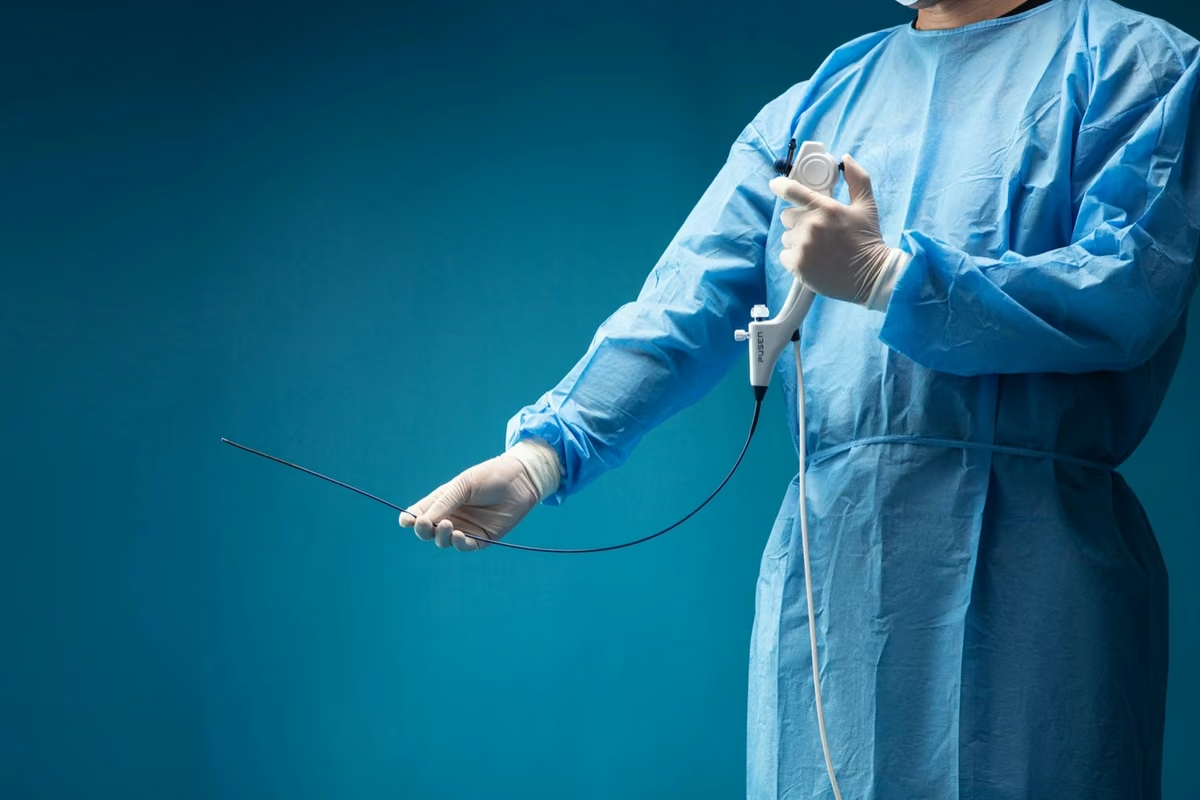
A colonoscopy is a procedure in which the doctor examines the inside of the large intestine and the last part of the small intestine using a flexible tube with a camera (endoscope).
What is it?
A colonoscopy is a procedure in which a gastroenterologist examines the inside of the large intestine and the last part of the small intestine [MOU1]. This is done using an endoscope, a flexible tube with optical fibers and a camera that transmits light and images.
Why this examination?
- The lining of the large intestine and the final section of the small intestine are examined thoroughly. This allows for the identification of inflammation or the detection of polyps.
- During a colonoscopy, the doctor may take a small sample of tissue (a biopsy), which is then examined in the laboratory.
- Most procedures, such as removing polyps and stopping bleeding, can be performed in a single session.

Preparation
Proper preparation is very important for a colonoscopy, as it increases the likelihood of detecting problems and reduces the risk of complications! If the colon is not sufficiently cleansed, the procedure may be postponed or interrupted. Therefore, be sure to follow the preparation instructions exactly as prescribed.
If you encounter any problems during preparation, please contact the endoscopy department as soon as possible.
Taking this medication will cause you to have watery stools in the hours that follow. You may also experience abdominal cramps.
The bowel preparation may reduce the effectiveness of certain medications, including the birth control pill. If you are taking medication for diabetes, consult your doctor regarding the dose and timing of your medication or injection. It is best to consult with your primary care physician or specialist about which medications you may, must, or must not take on the day of the exam. Proper preparation should begin (if possible) one week before the exam.
A good result from the preparation = watery, light yellow (not brown) stools without any lumps.
Please notify the secretariat of the following items two weeks before the examination:
- Allergies
- Diabetes, heart and/or lung problems
- Presence of heart valves, a defibrillator, a neurostimulator, or a pacemaker.
- Taking blood-thinning medications, such as aspirin-containing preparations, Plavix, Marcoumar, Clopidogrel, Ticlid, Xarelto, Pradaxa, Eliquis, Brilique, Marevan, Sintrom, Fraxodi, Clexane, Fraxiparine… In certain cases, blood-thinning medication will need to be discontinued, always in consultation with the doctor
- Taking anti-inflammatory medications

A light dinner around 4:00 p.m., and start PLENVU no later than 6:30 p.m.:
- Mix dose 1 with ½ liter (500 ml) of fresh water.
- Drink this product alternately with 1 liter of plain water.
- Drink the liquids within 1 hour to 1 hour and 15 minutes.
- Don't drink too quickly to avoid feeling nauseous.

Don't eat ANYTHING and start around 7:30 a.m.:
- Start your day with two glasses of cool, still water
- Mix dose 2 (sachets A and B) with ½ liter (500 ml) of fresh water.
- Drink this product alternately with 1 liter of plain water.
- Drink the liquids within 1 hour to 1 hour and 15 minutes.
How does it go?
This procedure is performed under general anesthesia, light sedation, or without anesthesia and requires an (outpatient) admission. If the procedure takes place at the outpatient clinic, please ask a family member or friend to take you home afterward. After general anesthesia, you must not drive a vehicle. Do not plan any important activities after the procedure. Your concentration and judgment may be impaired.
When it is almost your turn, you will be taken to the endoscopy unit. This is always done in a bed, since you may receive anesthesia. You will also need to put on a “surgical gown” to protect your own clothing. The nurse in the endoscopy unit will insert an IV into a vein in your arm so that the doctor can administer the anesthesia through it. Depending on the type of anesthesia used, you may or may not be conscious during the procedure.
During deep sedation, an oxygen mask is held over your face to increase the oxygen level in your blood. These powerful and reliable medications put you into a “light” artificial sleep. This sedation can suppress your breathing and your lungs’ protective reflexes (swallowing and coughing). Therefore, the safety requirements and preparation for sedation are the same as those for general anesthesia. If this has been agreed upon with you in advance, an even lighter form of sedation may be used, in which you are not completely asleep but are somewhat drowsy.
During the procedure, you will lie on your left side, and your blood oxygen level will be monitored continuously. This is done using a small monitoring device placed on your finger. You will also be given a pair of oxygen goggles to wear over your nose. The procedure takes about 20–30 minutes. After the procedure, you will rest (for about 30 minutes) in the recovery room in the endoscopy department, where you will be closely monitored.
Admission
You will be admitted at the scheduled time. At the reception desk (hospital entrance), you will receive identification tags and be directed to your ward and room. Upon admission to the ward, you will always be asked whether the preparation went well and whether your stool has already cleared. If the bowel preparation is still insufficient, an enema may be administered (after consultation with the doctor). In very rare cases, we may ask you to drink more fluids; in that case, your procedure will be postponed for a few hours. Once bowel preparation is sufficient, we ask that you continue to fast. This is especially important if you are also having a stomach examination and/or if the procedure will be performed under general anesthesia. We try to keep the wait time as short as possible. Unfortunately, we cannot guarantee that you will be seen immediately. Unforeseen circumstances may affect the estimated time of your exam. Therefore, it is best to bring something with you to make the wait more comfortable.
After the examination
After the procedure, you may experience some bloating due to the carbon dioxide gas that was injected. If this happens, lie on your left side and let the gas escape by passing gas. If you experience severe pain or bleeding, you should always notify the nurse or doctor. Your doctor will visit you in the recovery room or on the ward once you are fully awake to discuss the results of the procedure with you. You will also receive a letter for your primary care physician and for yourself explaining what steps to take next and how you will be notified of the results if tissue samples were taken. Once you have recovered sufficiently from the procedure and the anesthesia, you may leave the hospital with the doctor’s permission (approximately 2 hours after the procedure).
Risks
Risk Assessment for Plenvu
Common side effects (may affect up to 1 in 10 people):
- dehydration
- nausea (feeling sick)
- vomited
Side effects that occur occasionally (may affect up to 1 in 100 people):
- bloated stomach and stomach pain
- sensitivities and aches
- allergic reaction
- chills
- fatigue
- headache or migraine
- hot flashes
- Elevated blood sugar levels in patients with diabetes
- increased heart rate
- heart palpitations
- sensitivity of the anus
- drowsiness
- temporary increase in blood pressure
- temporary elevation of liver enzymes
- thirst
- various imbalances in salt balance
- weakness
Risks Associated with the Study Itself
Complications such as a perforation (in which a small hole forms in the intestine) or bleeding are extremely rare (0.3%) when only a diagnostic examination is performed. Complications are slightly more common (up to 2%) when treatment (e.g., removal of a polyp) is also required. Usually, this complication is detected immediately during the procedure and treated right away. In rare cases, these complications may require emergency surgery. Bleeding can sometimes occur later (up to 2 weeks after the procedure), but even then, it can usually be treated with another colonoscopy.