Liver diseases
Ascites Tap
Ascites is the accumulation of fluid in the abdominal cavity, which leads to a swollen and distended abdomen. This can have various causes, such as liver disease, heart failure, or cancer.
What is it?
Ascites is the medical term for “accumulation of fluid in the abdominal cavity.” This causes the abdomen to swell.
Why this examination?
An ascites tap is a procedure performed by a doctor to remove fluid from the abdominal cavity.
A distinction is made between two types of ascites paracentesis:
- Ascites tap for analysis of ascites fluid: Ascites fluid is removed from the abdominal cavity to determine its composition in the laboratory. Determining this composition can help identify the cause of the fluid in the abdominal cavity. Sometimes this procedure is also performed to rule out inflammation in the fluid.
- Ascites Tap for Fluid Drainage: If the abdomen contains a large amount of ascites fluid, the excess fluid may be drained from the abdomen via a catheter. Excess ascites fluid can cause symptoms such as shortness of breath, abdominal distension, nausea, etc. The primary goal of this procedure is therefore to alleviate your symptoms.
Preparation
- You do NOT need to fast before an ascites tap.
- The bladder must be empty before the procedure begins. Therefore, it is recommended that you use the restroom beforehand.
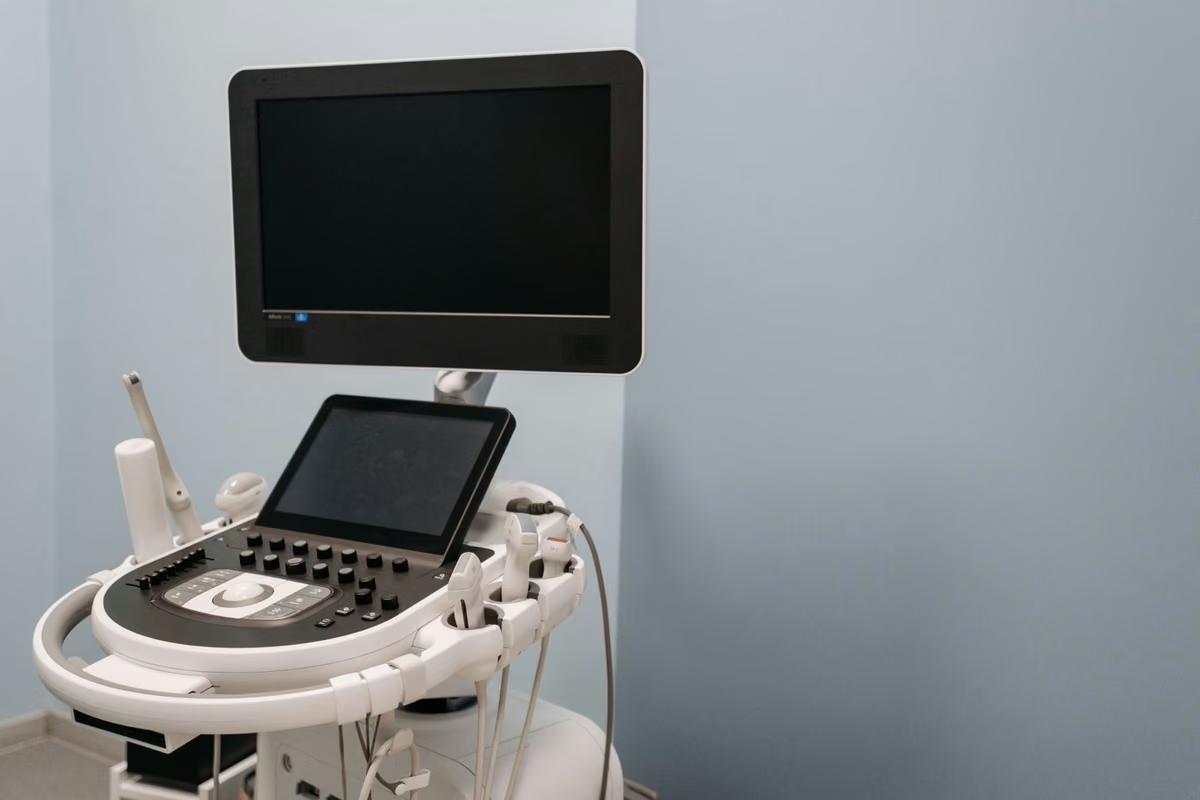
- Before the puncture, we usually perform an ultrasound of your abdomen. This is necessary to determine the best place to insert the needle in your abdomen. We will mark this spot on your abdomen with a pen.
Please notify us in advance of the following:
- Any allergies.
- I've had a fever over the past few days.
- Your at-home medication.
- Bleeding Problems
For the study
- You may lie down on your back on the bed, leaning slightly to the left if necessary.
- Your stomach must be exposed.
- The injection site is disinfected.
- The skin is numbed locally if ascites fluid is to be drained.
- The doctor inserts the needle.
- The ascites fluid is drained.
During an ascites tap performed as part of an examination, the ascites fluid is drawn directly into a syringe. Once enough ascites fluid has been collected to send to the laboratory, the needle is removed from the abdomen and the puncture site is covered with a bandage.
During an ascites tap performed as a treatment, the ascites fluid is collected in a tube (catheter) connected to a collection system suspended at the foot of your bed. The catheter remains in place until the ascites fluid stops draining or until the maximum permitted amount of fluid—as previously agreed upon with the doctor—has been drained. While the fluid is draining, we may ask you to change your position. Once no more fluid is draining, the catheter is removed and the puncture site is covered with a bandage. Sometimes both types of ascites punctures are combined. In that case, some fluid is collected via the drainage system and sent to the laboratory for analysis. Proteins: In some cases (depending on the cause of the fluid buildup in the abdomen), the ascites fluid contains high levels of protein. In such cases, draining the fluid causes you to lose a significant amount of protein through the abdominal fluid. As a result, you may need an IV to compensate for this protein loss.
After the examination
- After the ascites tap, it's best to avoid strenuous activity, as your body needs time to adjust to the new situation.
- Your pulse, blood pressure, and temperature will be checked.
- Check to see if the injection site is bleeding and if any fluid is still seeping out.
- If everything goes well, you can carefully get back up.
- You can go home the same day, unless otherwise agreed upon with your doctor.
- You can feel free to take a shower or a bath after the puncture.
Side effects
- (Mild) pain may occur after the peritoneum is punctured. This pain usually goes away on its own after a few hours. If it persists, contact your family doctor.
- If ascites fluid continues to seep from the puncture site, we can attach a small bag to collect the fluid until the seepage stops.
- If you are taking blood thinners or have a bleeding disorder, a bruise may develop at the injection site (even if you apply pressure for a long time).
- If you develop a fever (>38.5°C), you should contact your family doctor.
- If the skin around the insertion site becomes bright red and the area around the insertion site is painful, you should also contact your doctor.
Risks
An ascites tap is generally a safe procedure that involves little to no risk. However, bleeding can occur in rare cases.